Virbac C.E.T. Enzymatic Toothpaste
Temsili görsel (stok fotoğraf); ürünün kendisi değildir.
Why Brushing Rather Than Chews
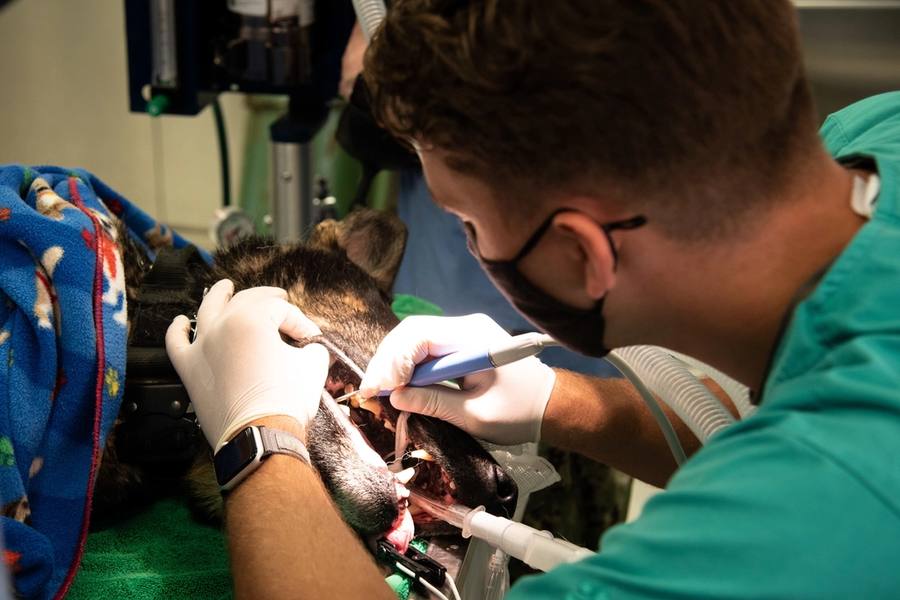
Dental disease is among the most common conditions vets see, and by middle age a large proportion of dogs have periodontal disease that requires an anaesthetic procedure to treat. It is painful, it is expensive, and it is substantially preventable.
Daily brushing is the intervention with by far the best evidence. Dental chews, water additives and dental diets help to varying and generally modest degrees; mechanical removal of plaque before it mineralises into tartar is what actually works.
The uncomfortable part is that it has to be daily, or close to it. Plaque mineralises within days, and brushing twice a week is considerably less effective than the effort suggests.
Why Not Human Toothpaste
This matters and it is not widely enough known. Human toothpaste frequently contains xylitol, which is seriously toxic to dogs, and fluoride, which is not intended to be swallowed in those quantities. Dogs cannot rinse and spit.
Enzymatic pet toothpaste is formulated to be swallowed safely and does not foam, which matters because foaming alarms dogs and makes the whole exercise harder.
The enzyme system provides some antibacterial action in addition to the mechanical cleaning, which is a modest bonus rather than the main mechanism — the brushing does most of the work.
Introducing Brushing
A dog that has its mouth held open and a brush pushed in will resist permanently, and this is where most attempts fail within a week.
The approach that works is gradual: let the dog lick the paste off a finger for several days, then rub a finger along the outside of the teeth, then introduce a finger brush or a soft brush, working up over a week or two.
Only the outside surfaces need brushing, which surprises people and makes the job far more achievable — the tongue keeps the inner surfaces relatively clear, and the outer surfaces of the back teeth are where disease begins.
Against The Alternatives
Against dental chews, brushing has substantially better evidence; chews are a useful supplement and not a replacement, and many are high in calories.
Against water additives, the evidence is weaker still, though they require no cooperation from the dog at all.
Against professional scaling under anaesthetic, that treats existing disease and brushing prevents it; both have a place and prevention is cheaper and kinder.
Who Should Not Buy It
Anyone with a dog whose mouth is already painful should see a vet first, since brushing an inflamed, infected mouth hurts and the dog will rightly refuse.
Anyone who will brush once a week should know the benefit drops off sharply, though it is still better than nothing.
Anyone with a dog that genuinely cannot be handled around the mouth should discuss alternatives with a vet rather than forcing it.
The Verdict
The right product for the single most effective thing you can do for a dog's long-term dental health, and formulated to be swallowed rather than spat out.
It only works if used daily, it requires a patient introduction over weeks, and it cannot fix existing disease.
Never use human toothpaste — xylitol is genuinely dangerous to dogs, and that is the most important line in this review.
Bir bakışta
Artılar
- Formulated to be swallowed safely, unlike human toothpaste
- Poultry flavour that most dogs accept readily
- Non-foaming, which makes brushing far easier
- Supports the intervention with the best dental evidence
Eksiler
- Only effective with daily or near-daily use
- Requires a patient introduction over one to two weeks
- Cannot treat existing periodontal disease
- Not usable on a dog with a painful mouth
Sıkça sorulan sorular
Can I use my own toothpaste?
No, and this is important. Human toothpaste often contains xylitol, which is seriously toxic to dogs, and fluoride that is not meant to be swallowed. Dogs cannot rinse and spit, so pet toothpaste formulated to be swallowed is the only safe option.
How do I get my dog to accept brushing?
Gradually over one to two weeks — licking paste from a finger, then a finger rubbed along the teeth, then a brush. Holding a dog's mouth open and pushing a brush in on day one is why most attempts fail permanently.
Are dental chews not easier?
Easier, and considerably less effective. Brushing has by far the best evidence because it mechanically removes plaque before it mineralises. Chews are a reasonable supplement, often calorific, and not a replacement.
Teknik Özellikler
| Type | Enzymatic pet toothpaste |
| Swallowing | Safe; no rinsing needed |
| Foaming | None |
| Flavour | Poultry |
| Frequency needed | Daily or near daily |
| Surfaces to brush | Outer only |
| Human toothpaste | Never; xylitol is toxic |
| Treats existing disease | No |
Özet
Supports the single most effective thing you can do for a dog's teeth, and it is safe to swallow. It has to be daily — and never, ever use human toothpaste.
Amazon'da Fiyatı Kontrol Et